If you’re looking to get into drone spraying in Michigan, the process isn’t complicated, but it does require the right steps.
Between FAA requirements and Michigan state regulations, most operators get stuck trying to figure out what comes first and what actually matters.
This guide breaks down exactly how to get licensed and operational.
🔻 What License Do You Need for Drone Spraying in Michigan?
To legally spray with a drone, you need two core things:
- FAA Part 107 (commercial drone license)
- FAA Part 137 (aerial application certification)
In Michigan, you also need to complete an approved training program recognized by the state.
🔻 Step 1: Get Your FAA Part 107 License
This is your starting point.
Part 107 allows you to legally operate a drone for commercial use.
You’ll need to:
- Pass the FAA knowledge test
- Understand basic airspace rules
- Register your drone
Without Part 107, you can’t move forward.
🔻 Step 2: Apply for FAA Part 137
This is what allows you to actually spray.
Part 137 is required for:
- Applying pesticides
- Spreading seed or fertilizer
- Any aerial application work
This step involves:
- Submitting an application
- Documenting your operation
- Completing FAA review
🔻 Step 3: Complete MDARD-Recognized Training
Michigan requires aerial applicators to complete training through an approved provider.
This is where most operators slow down.
You need:
- Approved training
- Operational understanding
- Proper documentation for the state
Quantum Autonomous Services is listed as a provider supporting new applicators through this process.
🔻 Step 3.5: Michigan Commercial Requirements Most People Miss
This is where a lot of operators get stuck.
Beyond FAA licensing and training, Michigan requires additional documentation before you can legally operate commercially.
You’ll need:
- Pesticide liability insurance (commercial operations only)
- Minimum 5 hours of documented flight training
- Required pesticide applicator endorsements:
- Core
- Aerial (AE)
- At least one additional category (IA, 1B, 1C, 7F, etc.)
- Mix/load form documentation
- Notarized statement of experience
- Pesticide Application Business License (commercial only)
This is the step that catches most people off guard.
It’s not difficult, but if you don’t prepare for it early, it can delay your ability to operate.
🔻 Step 4: Get Operational
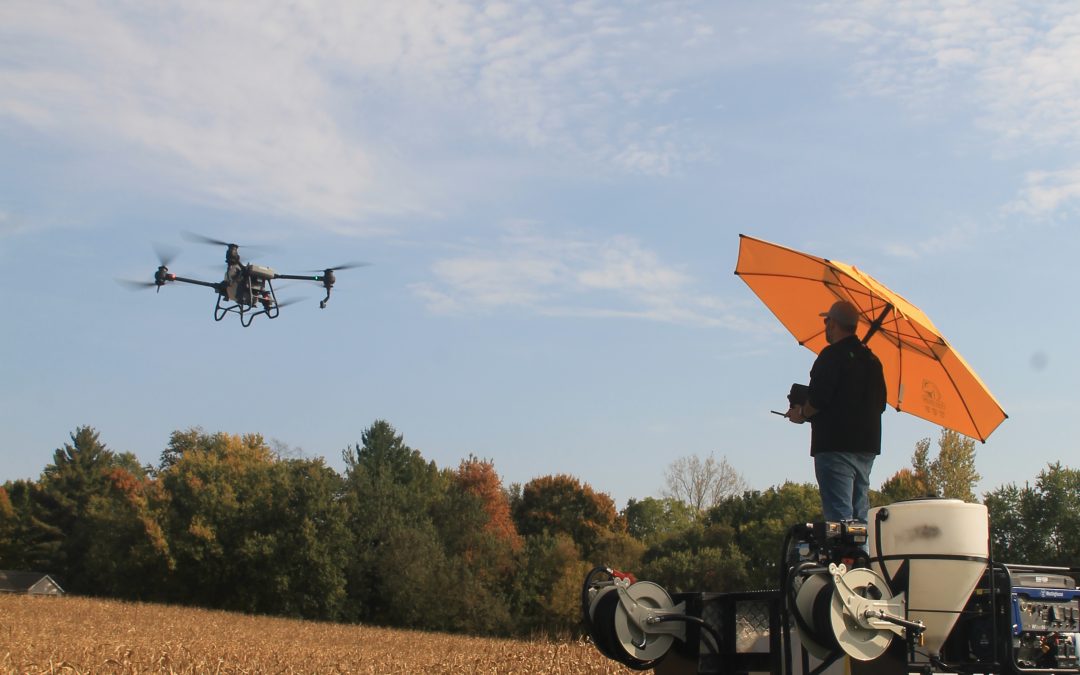
Getting licensed is only part of the equation.
You also need:
- The right drone system
- Battery and charging workflow
- Mixing and loading setup
- Field-ready processes
This is where most new operators struggle, not with licensing, but with execution.
👉 If you’re working through this process, see our Agricultural Spray Drones in Michigan page for systems, training, and support to get operational faster.
🔻 Common Mistakes New Operators Make
- Trying to skip steps in the licensing process
- Buying equipment before understanding workflow
- Underestimating setup time in the field
- Not planning for battery and mixing logistics
Avoiding these early mistakes saves time and money.
🔻 Final Thoughts
Getting licensed for drone spraying in Michigan is straightforward when you follow the right process.
The key is not just getting approved, but getting operational with a system that actually works in the field.